
01What Is BCI?
“The brain is a world consisting of a number of unexplored continents and great stretches of unknown territory.” — Santiago Ramón y Cajal
To most, ChatGPT was a surprise. Three years before it landed, AGI1 was a taboo topic, something people who read too much science fiction would bring up. Outside of a very niche subcommunity in SF and London, it was deemed absurd to think that within a few years a machine would surpass us at most tasks. The world expected decades if not centuries before it would be able to talk to an intelligent machine.
The world was wrong.
After a collective miss of that magnitude, intellectual humility is the least we can do. However, the right response is not just to ask why almost everyone failed to see LLMs coming, it is to ask ourselves: what are we getting just as wrong today? What transformational technology is on a clear exponential trajectory while being dismissed as science fiction by most?
Brain-computer interface is certainly a prime candidate. Too cryptic for the masses, seemingly impossible to build, and with an expected timeline of decades before anything meaningful comes out of it. All while the data is telling us a very different story.
Indeed, BCIs are about to surprise the world, and the ramifications of the technology will extend far beyond neuroscience, reaching all the way to frontier AI. An impact which will be vastly magnified by the collective ignorance of the impending arrival of the technology. Over the next five years, the field will move from an interesting research project to the center of the technological frontier.
BCI is now only a few years away from its ChatGPT moment.
So what exactly is BCI? A brain-computer interface (or BCI) is exactly what the name suggests: a way for the mind to communicate directly with a computer. Instead of relying on hands to type or a voice to speak, BCI systems read the natural signals produced by the brain and translate them directly into digital commands. They remove the physical barriers between our thoughts and machines.
It may sound a lot like magic or telepathy (and in many regards it is), but remarkably, it is possible. We are already able to send words, images and emotions to machines via the power of thoughts only.
The deeper promise of this technology is a faster control of robots and digital systems and the removal of layers of compression between thought and expression; unlocking richer, higher-fidelity communication between minds, biological or artificial.
As simple as it is to describe, building BCI is in fact a herculean task, under this simple premise lives a wealth of complexity. Humanity has been trying to crack this problem for more than 50 years and just like AI, it has been making slow, but compounding progress over the decades.
Three Paths
When people say “BCI” they tend to mean three quite different, yet adjacent, technologies. The simplest way I have found to explain the difference is the stadium analogy.
Imagine you are standing outside a packed stadium during a football match. The crowd is screaming. You want to know what they are saying.
You can stand outside the stadium and hold a microphone up to the wall. You will hear something; it will be muffled and washed out and dominated by the loudest, simplest patterns. That is non-invasive BCI. The brain equivalent is sensors sitting on the scalp and picking up electrical, magnetic, or hemodynamic activity through the skull. No surgery, and no FDA approval is required for consumer applications, it has the broadest theoretical user base, but also the noisiest data.
Alternatively, you can drill a hole in the wall and put a microphone right against the inside surface. The signal gets dramatically cleaner, although you still cannot quite pick out individual voices. That is semi-invasive; devices placed under the skull but not through the dura mater. Comparable to outpatient procedures we already do at scale (LASIK, cochlear implants, pacemakers). This path takes regulatory work, and recovery rooms.
Or you can walk into the stadium and put a microphone next to a specific person’s mouth. That is fully invasive, electrodes directly in brain tissue (what Neuralink is doing). The cleanest signals possible but also the longest road; involving surgery, regulations, and generational timescales for adoption.

If you track how these three paths improve over time and effort, they each form an S-curve. Progress starts slow, accelerates rapidly as the technology matures, and eventually flattens out when it hits the physical ceiling. The metric that matters most is practical bandwidth: how much useful information we can actually pull out of the head and put to use at scale.
Non-invasive has the capacity to scale faster over the next few years and reach a viable threshold of market value because it does not require a surgeon, but its capability ceiling might arrive early because the skull blocks signals. Fully invasive has a theoretically much higher ceilingPhysical Principles for Scalable Neural RecordingFirst-principles analysis of what neural recording at scale physically requires: readout is gated by information throughput per unit mass, power, and volume, not transducer sensitivity. The foundational reference for treating BCI hardware as a scaling problem, not a signal-purity one.▸, but it must first crawl under the heavy floor of clinical regulation and surgical throughput before it can even start to scale.
The important point is that nobody actually knows where the ceiling for any of these curves sits today. We have not climbed far enough to hit the head-room of the possible, until we do, the different modalities are just different ways of asking the same question: What is the fastest way to decode the mind at scale?
There is one more distinction worth drawing. Reading vs. writing. Reading the brain (pulling structured information out) is a fundamentally easier problem than writing to the brain (putting an intention or experience in). Sensing the magnetic, electrical, or hemodynamic shadow of activity through the skull is hard but tractable. Stimulating a specific neuron or population from outside the head, with the precision to cause a thought rather than disrupt one, is a much harder problem. It may simply not be possible non-invasively at high fidelity.

But philosophy does not build hardware, what matters is the data. So let’s look at what non-invasive BCI can actually do today, and establish the physical baseline of what is possible.
02The Art of the Possible
“When a distinguished but elderly scientist states that something is possible, he is almost certainly right. When he states that something is impossible, he is very probably wrong.” — Arthur C. Clarke, First Law, 1962
BCI capabilities are already beyond what most people expect. Here are four things that happened in the last three years, which you probably did not hear about.
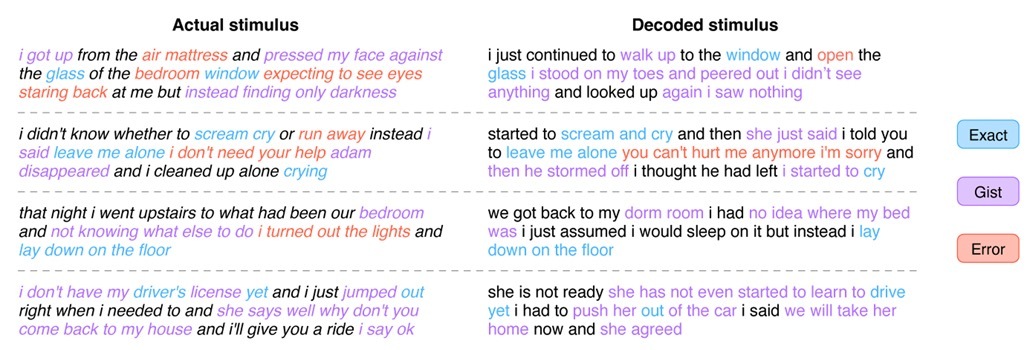
A team at UT AustinSemantic reconstruction of continuous language from non-invasive brain recordingsAn fMRI language decoder that reconstructs the gist of perceived speech, imagined speech, and even silent video from non-invasive brain activity, using a GPT-based decoder. The first continuous-language decoding at this fidelity without surgery.▸ placed a person in an fMRI scanner, played them a podcast, and reconstructed the sentences out of brain activity, sentence by sentence; not the audio but the meaning itself. They can do this for silent inner narration too: you think the sentence, and the model writes a paraphrase of it.2
A team at StanfordHigh-performance brain-to-text communication via handwritingAn intracortical BCI that decoded imagined handwriting from motor cortex into text at 90 characters per minute, roughly phone-typing speed and a record for communication BCIs at the time.▸ implanted microelectrode arrays in a paralyzed person’s motor cortex, asked them to imagine handwriting letters with their hand, and decoded typed text at 90 cpm. That is faster than most of us type on a phone. (A team at UCSFA high-performance neuroprosthesis for speech decodingA speech neuroprosthesis that decoded attempted speech from cortical activity into text, synthesized voice, and a talking avatar for a paralyzed participant, approaching conversational rates.▸ reached comparable rates a couple of years later, decoding intended speech directly from the cortex.)
A team at PrincetonMindEye: fMRI-to-Image with Contrastive Learning and Diffusion PriorsReconstructs seen images from fMRI by mapping brain activity into CLIP space and rendering with a diffusion model, reaching near-photographic reconstruction from non-invasive signals.▸ captured fMRI activity from someone looking at a photo and reconstructed that photo from the brain signal alone, using diffusion models trained on neural-image pairs.

A team at TongjiNeuroClips: Towards High-fidelity and Smooth fMRI-to-Video ReconstructionReconstructs continuous video from fMRI recorded while subjects watched natural video clips, pairing a semantics reconstructor for keyframes with a perception reconstructor for smoothness, fed to a pretrained text-to-video diffusion model.▸ extended the same idea from stills to video. They played people short clips, and then decoded the videos from their minds. Pull that thread forward a decade, and you can imagine your phone displaying live visuals of what you just imagined.
























We extracted a video out of someone’s head from only a few tens of hours of scan data, how is that even possible? As shocking as it may sound, this is the current state of the field.
And while none of these demonstrations, by itself, proves that scaling the technology will be easy (fMRI does not scale to the living room and invasive microelectrode arrays do not scale to healthy consumers), they show something much more fundamental: that the signal is there, and that modern models can read it when the data is clean enough. And this is not just wishful thinking anymore, those are published, peer-reviewed demonstrations. Together, they all point to the same structural truth: if a thought leaves a trace in the signal, a large enough model can find it.
The remaining question is how much of that signal can be recovered non-invasively, at scale, in real life.
As can be seen from those examples, the current frontier work in BCI is doing impressive things in narrow domains with tiny datasets. One of the core claims of this manifesto is that the BCI field is about to undergo the exact same phase transition AI went through in 2017: moving from clever human engineering to brute-force scaling. The same structural shift which produced LLMs.
But before we look into the most promising way to scale BCI, there is one important piece of human physiology worth discussing in the context of human-machine communication. It sets both the floor a BCI must surpass to become useful and the natural ceiling on our ability to communicate with AI; I am talking about our peripheral nervous system.
03The Peripheral Nervous System Bar
“The hand is the cutting edge of the mind.” — Jacob Bronowski, The Ascent of Man, 1973
The peripheral nervous system is key to understanding the role and limitations of BCI in interfacing with machines.
The fancy wording “peripheral nervous system” simply refers to the biological hardware that connects your brain to the outside world, otherwise known as eyes, ears, hands, vocal cords etc. The PNS is the way your brain interacts with reality; any effect your mind has ever had on the world has first had to pass through it.
It occupies a strange position between humans and machines. For AI, it is a painfully narrow bottleneck; while for BCI, it is an extraordinarily capable incumbent.
Too slow for AI
From the perspective of AI, your peripheral nervous system is slow, too slow, and is the first half of the bandwidth problem3 (the other half being the speed of thinking itself).
Indeed, every computer interface humans have ever built sits between two clocks (a clock in information theory defines how quickly a system processes information): the biological one and the machine one; and humans now have a slower clock speed than AI. At this point, the human clock is inconveniently slow: speech runs at about 150 words per minute, typing at 50, reading at maybe 250, inner thought is harder to measure but probably runs at 1,000 to 4,000 words per minute equivalent, and a great deal more if you count the non-verbal parts of cognition. All while AI cognition is orders of magnitude faster.
For most of computing’s history, the gap between the two clocks did not matter much. Machines were slow enough that a keyboard could keep up, and humans were comfortably able to control the machines; but AI changed that. Machine capability has scaled by orders of magnitude in the last five years; yet the interface still routes through a keyboard. Models can now read a book in seconds and write one in minutes, and they are only getting faster. Increasingly, the slowest component in the loop has become the human. Both our cognition speed and our interface bandwidth are becoming the bottleneck.
To provide an analogy, imagine trying to direct a civilization that experiences ten years between each word you speak. A ten-word instruction would take it a century to receive. That is the emerging human-AI interface problem: the machine can race through vast amounts of reasoning while human reasoning is left in the dust and intent still trickles in through speech, typing, and clicks.
That is where neurotechnology comes into play, it can help close that gap. As AI gets better at thinking and worse at waiting, the value of letting humans co-think with it grows fast; a direct neural channel removes the need to compress multi-dimensional thoughts and emotions into lossy, sequential streams of typed or spoken words. It lets you communicate your intent unfiltered to the AI, and, at the limit, it lets you upgrade your cognitive hardware to match the machines.
Zooming out, this mismatch stems from the fact that two forms of intelligence are now co-evolving; machine intelligence, scaling at the rate of compute, and human intelligence, scaling at the rate of biology. Learning to co-exist with a new form of intelligence which surpasses us on so many levels is an unprecedented challenge. Each year AI beats most of the new benchmarks we create for it, it unlocks new skills, and it improves itself at an accelerating rate. Figuring out ways to successfully navigate this transition while keeping humans in the loop is a fundamentally unresolved problem, and a hard one too.
BCI is promising to be a critical tool to address this growing AI-human mismatch. It is arguably the only tool we have that focuses on raising human capability rather than containing AI capability. Currently, most of the levers the alignment4 community is reaching for (interpretability, evals, governance, scalable oversight) are defensive; they try to either slow AI capability, constrain it, control it, or interpret it after the fact5. And in the long run, only a lever that raises the human capability can keep the human side of the loop meaningful as the machine side continues to improve. That is what makes BCI, and neurotechnology more broadly, a fundamental pillar of any long-term arrangement in which humans stay in the loop.6
We will come back to the topic of AI and BCI convergence in the second half of this manifesto (Part III
Part IIIThe CollisionWhy does BCI matter for AI?▸ and Part IV
Part IVThe AftermathWhat are the implications for the future?▸). But before doing so, let us continue our exploration of BCI.
Too fast for BCI
From the perspective of BCI, your fingers can hit a key in a few hundred milliseconds with high accuracy, and your tongue and jaw produce roughly 150 wpm of speech. The bar a BCI must clear to be useful to a person whose hands and mouth still work is therefore extreme. It is not enough for a BCI to read your intent, it has to read your intent with an inference latency low enough, and an accuracy high enough, to beat what your hands and mouth already do for free. If sub-vocal text takes 800 ms to decode at a rate of 10 wpm, the user will simply use their thumbs.
This is why every reasonable timeline for BCI splits into two milestones. There is “does decoding work at all”, which we are largely past for many tasks; and there is “does decoding work at a level a person without an existing peripheral-nervous-system disability would pay for”. Here, progress is non-linear; small fidelity gains near the threshold drive disproportionate usefulness. Voice recognition is the cleanest analogy, a 95% transcription system is unusable, whereas a 99.9% system can be used everywhere.
This is also why medical applications have the lowest bar to clear, and are the first to fall. Patients with severe neuromuscular conditions (ALS, locked-in syndrome, paralysis) do not have an intact peripheral nervous system to compete against. The bar to do something useful for them sits well below the consumer bar. Tolerance for physical risk is higher, and the urgency is absolute. Almost every working BCI demonstration to date has been in this regime.
But medical only reaches a few thousand patients, the only way to reach hundreds of millions, at least in the short term, is through a consumer non-invasive product. Non-invasive is the fastest path to scale.
04The Fastest Path to Scale
So far, I have had a stronger focus on non-invasive BCI, as opposed to invasive or semi-invasive. There is a reason for that. Non-invasive BCI has a couple of advantages over alternatives which make it a much more suitable candidate for applying the AI scale paradigm. And while the cleanest signal we can get comes from inside the brain, the fastest path to scale BCI will be through non-invasive.
Twenty years ago, the consensus held that meaningful brain reading required going inside the skull. The signal-to-noise through bone seemed too poor for anything else. That belief is why the surviving old-guard BCI companies (Neuralink, Blackrock, Synchron, Paradromics, Precision Neuroscience) all chose surgery from the start; the bet was reasonable at the time. For writing back into the brain, it still is, putting precise patterns of activity into specific neural circuits needs resolution only invasive or semi-invasive can deliver, and that still holds true this decade. For reading, however, large language models have rewritten the rules of the game. Models trained on enough biological noise can pull structure the unaided eye could not see; the cost of extracting cognitive signal from messy non-invasive signal has been dropping by orders of magnitude. The skull still attenuates the signal, but large models just get better at reading through it over time.

But if invasive signals are obviously the cleanest, why bother with non-invasive ones at all? Why not just, as a field, commit to the invasive path?
There are a few reasons.
First, surgery is the hardest constraint to overcome. On top of the fact that most healthy people are not exactly lining up for elective brain surgery. Brain surgery means FDA pre-market approval (a regulatory pathway that takes 7 to 10 years and tens of millions per device). It means hospital procurement cycles (18 to 36 months from outreach to first scheduled patient). It means risk-averse insurance underwriting. It means an operating-room throughput limit. Even at maximum velocity, a single neurosurgical center can only do dozens to low hundreds of implant procedures per year7. And even in a best-case scenario, a brilliant invasive technology working perfectly will only be able to reach a few thousand patients in the time a successful non-invasive product could reach tens of millions.
As of May 2026, fewer than 100 people worldwide had received chronic invasive BCIs, mostly through Neuralink and Blackrock/BrainGate, with annual growth still measured in dozens. Non-invasive consumer BCIs, by contrast, already exceed one million users. Muse alone reports over 500,000, Emotiv over 70,000, and BrainCo tens of thousands, with Neurable, NextSense, and Meta expanding the category.
Fully invasive systems will keep advancing, and they will eventually produce the highest-bandwidth channel into the brain. There is no doubt that they are the final destination of the BCI field, but physics, biology, and the medical establishment dictate their timeline.
Second, we do not know the limit of non-invasive. While we know that invasive BCI is ultimately better in the long run, we have no idea what the performance ceiling is for non-invasive. The honest scientific position on non-invasive BCI is that we do not know how good it can get, because nobody has stress-tested it at scale. Every reasonable counterargument to non-invasive points to signal quality through the skull, but every reasonable counterargument has the same hole: it argues from a theoretical physics standpoint about a problem that is inherently empirical. No data-backed argument has shown that building a consumer device with non-invasive BCI is not achievable. The few experiments that have looked harder show that scaling laws are still holding.
Third, a working non-invasive BCI would cause a flywheel effect. The fastest way to accelerate any frontier technology is to ship a consumer product at scale. In the AI world, that was ChatGPT. A first working product of a groundbreaking technology ignites a flywheel, it generates attention, attention pulls capital, capital pulls talent, and talent builds the next iteration. But flywheels need a first push to start turning, right now, the BCI flywheel is almost static. There are some medical demonstrations and some lab papers, but no real consumer device. And the only chance to get there that we have within the next five years is through non-invasive.
Take Tesla. Before the Roadster8, electric cars were a fringe idea; a sliver of attention with almost no capital. Then Tesla shipped a flawed but working sports car, and the world saw, for the first time, that an electric car was a thing you could actually own and drive. Public attention shifted and capital followed. The trillion-dollar pipeline that built the Model S and the decade of EV companies behind it was only possible once that first basic car proved the category existed. Non-invasive BCI is where Tesla’s first car for BCI is made. What will fund the rest of the field is then the public-belief shift that arrives when a working consumer device exists.
But what if the skull is simply too thick? If you remain skeptical that non-invasive hardware can clear the consumer bar, and think it is a waste of effort, you can evaluate the worst-case scenario, the strategy is hedged.
First, the engineering transfers. The decoder architectures, data conventions, and multi-modal sensor stacks being built right now are largely hardware-agnostic; they port cleanly to semi-invasive and invasive systems. The talent and capital that enter the field stay in the field. Second, the data is an asset. Even a stalled consumer push can generate a large data corpus of multi-modal neural data; this would still be an extraordinarily valuable resource for the rest of the field. Even in the worst-case scenario, pushing the non-invasive limit would still accelerate the rest of the field.
The BCI flywheel assumes it is possible in the first place to build a working product from non-invasive technology in the short term. The bet is that the brain emits enough signal through the skull to decode useful information non-invasively. The question is whether the signal that survives (through the skull, through movement, through a Monday afternoon, through a different user) carries enough information for better sensors and larger models to make sense of it at scale.
Buried · 15% signal-to-noise
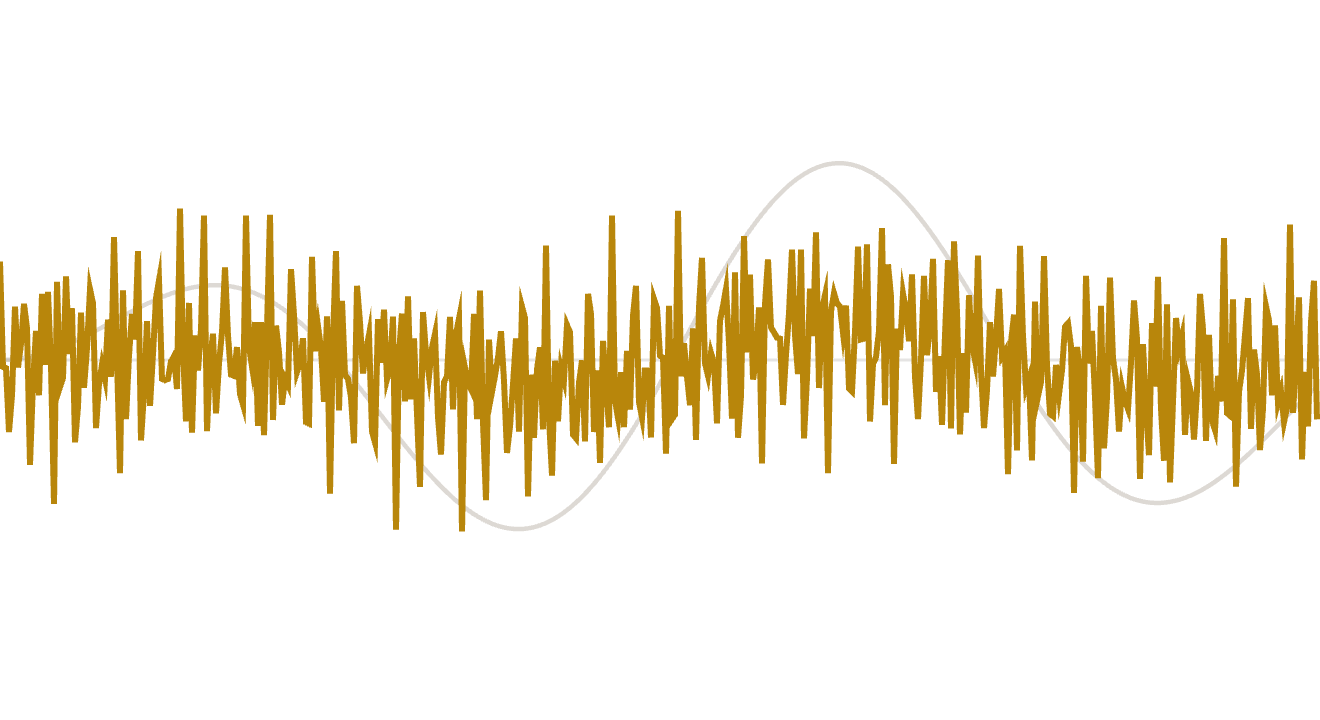
Borderline · 40% signal-to-noise
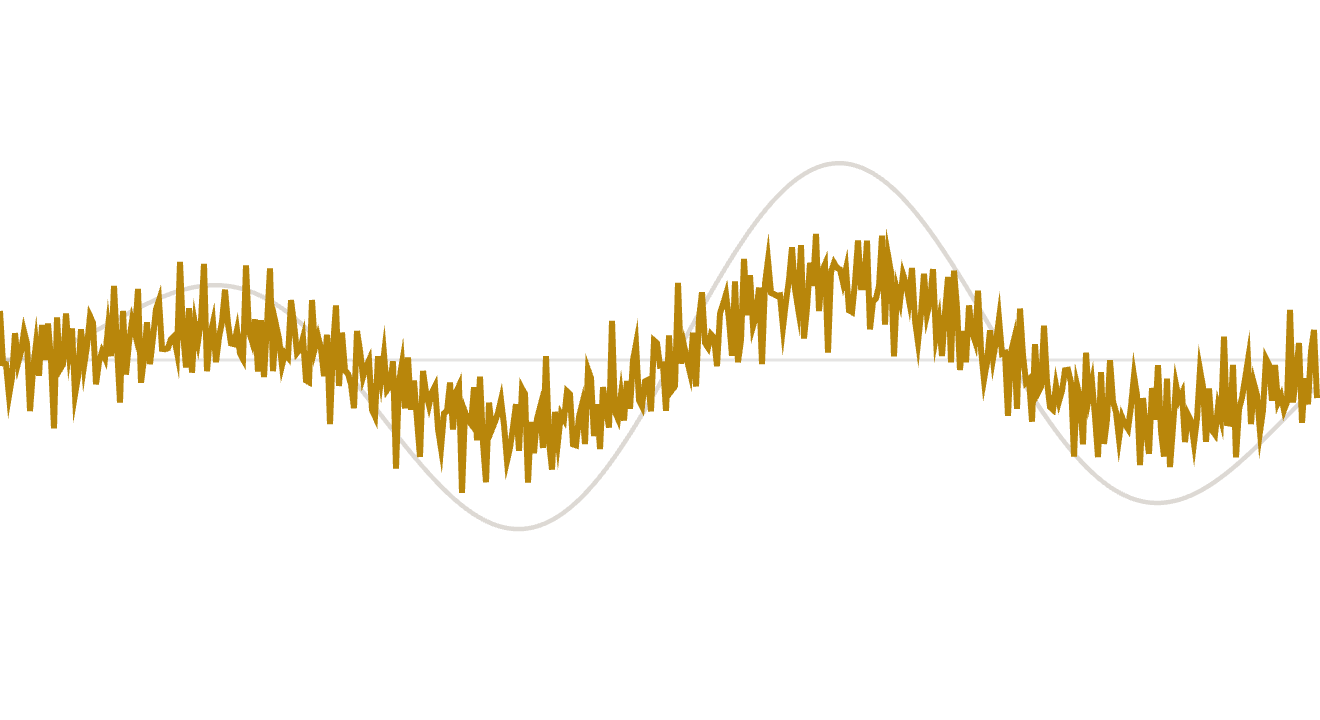
Decodable · 75% signal-to-noise
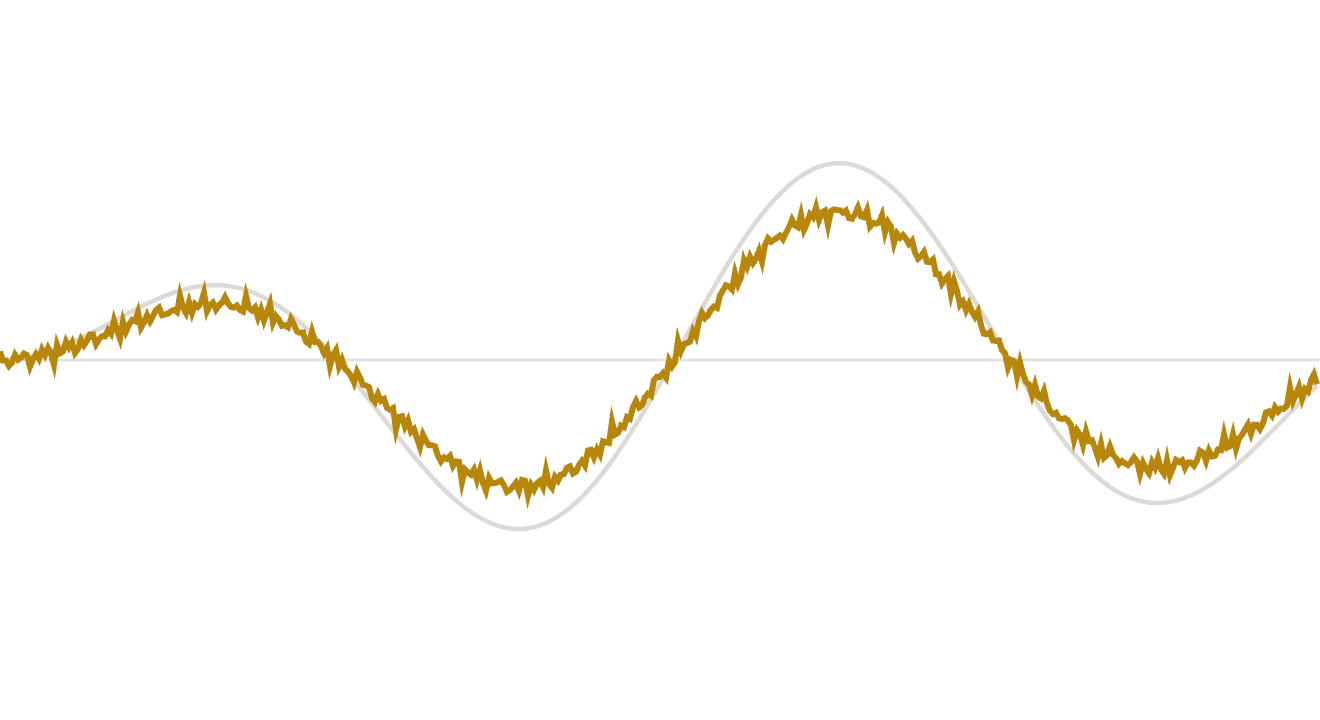
The fundamental thesis is not just that signal exists, it is that enough of that signal is stable across people, sessions, and contexts that pretraining can amortize the cost of learning one new brain. That is more of an empirical question than a theoretical one. We do not know the limit of non-invasive brain decoding yet because nobody has stress-tested it at scale. We will only know what the physics actually allows once we build the infrastructure to test it. As of 2026, the true ceiling of the non-invasive hardware remains completely uncharted.
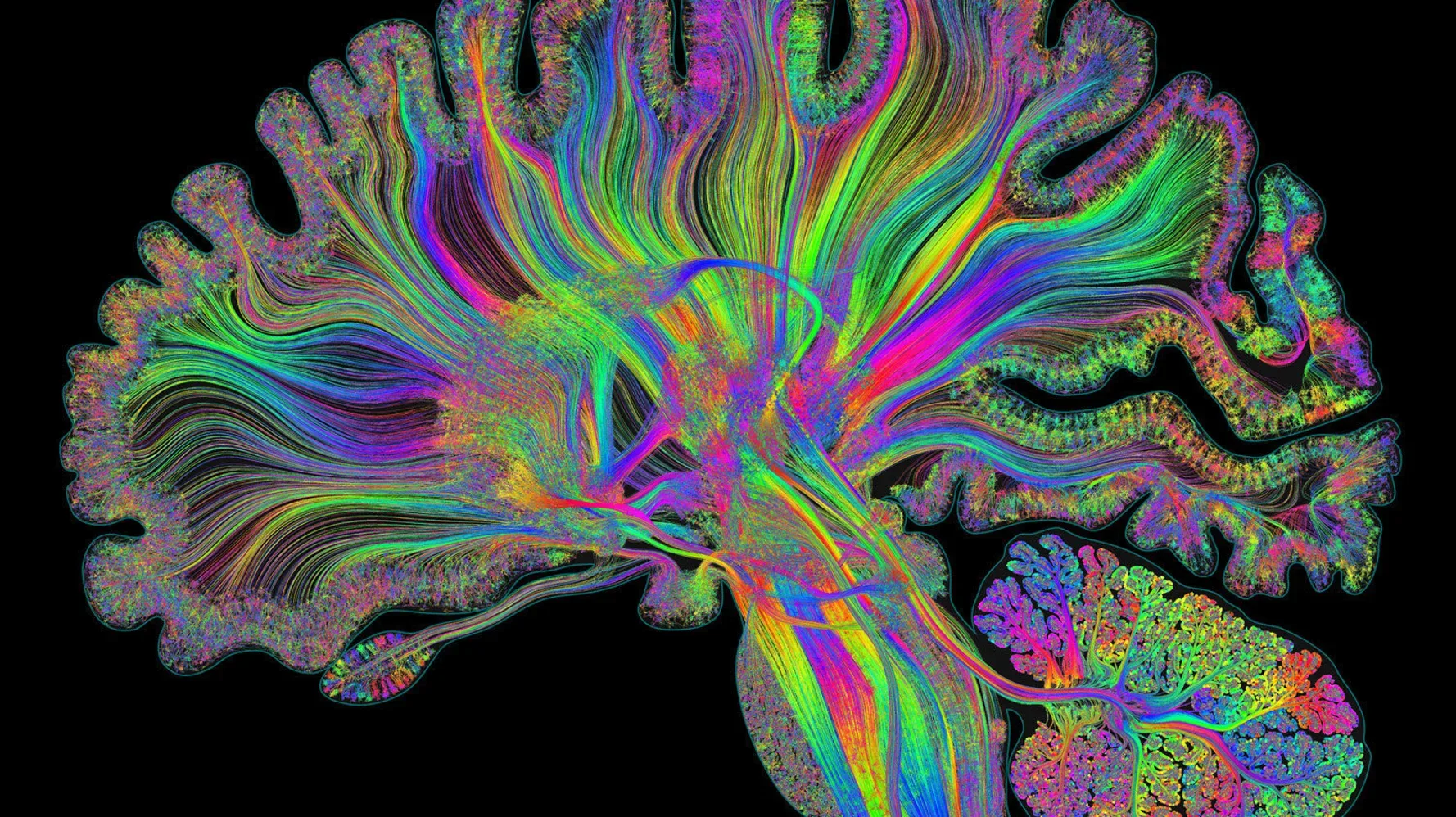
This sets the threshold of capabilities that a consumer BCI must meet to be useful and scale. For the first time, the conditions to clear this threshold are coming together; and they draw a pattern that I have seen before.
05Why Now?
Back in the rainy London winter of 2018, I read a book which changed my life: Life 3.09. I picked it up out of curiosity, but by the time I turned the final page, I was convinced that the transition towards AGI was already underway. From there onwards, I decided to pivot my life around that conviction.
Digging into BCI over the past decade has brought back the same sense of recognition. The evidence remains scattered across laboratories and modalities, and the technology still looks crude enough to dismiss. Yet I have seen what happens when capability compounds faster than consensus, and BCI now looks to me the same way AI did in 2018: underestimated and closer than it appears.
Eight-year Offset
To borrow the AI timeline for a second: BCI has roughly an 8-year delay relative to AI; it is at the same maturity level as AI was in 2017. The year the transformer architecture10 emerged, two years before GPT-2 made scaling laws visible and five years before ChatGPT made it obvious to everyone else.
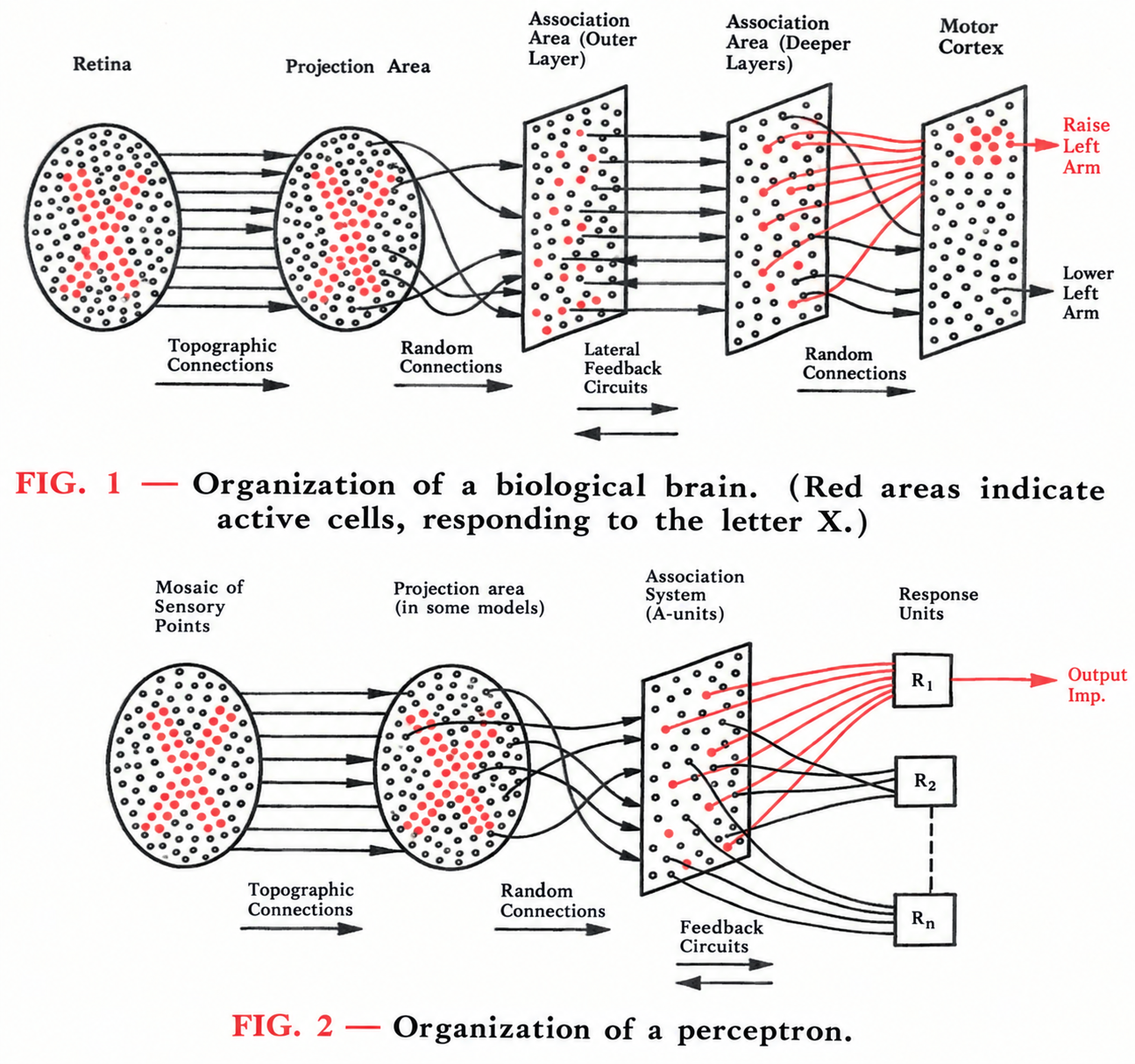
The parallel runs deeper than timing, the brain and AI have had a deeply intertwined history since their very inception. AI was initially modelled on ourselves, or on our brain to be more accurate; neurons, neural networks, synaptic weights, and training are all concepts borrowed from biology. AI took inspiration from that architecture to build its foundations. However, this flow is about to reverse, it is now time for BCI to learn from AI to make the next leap forward. Specifically, to use the AI scaling paradigm for the BCI field. Most people, including a meaningful chunk of the neurotechnology field itself, still do not recognize how impactful it would be to apply scaling to BCI. But scaling is about to become the dominant narrative in BCI as well.
The Ignition Stack
The running joke in the field is that “BCI has been five years away for 30 years”,11 but the joke may finally be running out of material. The conditions for scaling BCI have been converging in the past few years, specifically:
- AI models got good enough. Brain decoders are only as strong as the foundation models behind them. Until roughly 2024 those models were too small or too narrow to pull structure from biological noise. Today’s frontier-class models are finally able to.
- Sensors got cheap. EEG, fNIRS, sEMG, the first consumer-grade OPM and ultrasound front-ends have all dropped significantly, riding smartphone and wearables curves.
- Brain decoding graduated from toy technology to scalable technology. The previous generation of work topped out at simple motor commands: cursor left, cursor right, one character at a time. The new generation reads sentences, images, and speech directly from brain activity. TangSemantic reconstruction of continuous language from non-invasive brain recordingsA model trained on fMRI recordings of subjects listening to podcasts reconstructs the meaning of new sentences from brain activity alone, including silent inner speech. The first compelling demonstration of non-invasive semantic decoding at the sentence level.▸, WillettHigh-performance brain-to-text communication via handwritingThought-to-text at 90 characters per minute, decoded from intracortical recordings while a paralysed subject imagined writing letters by hand. The handwriting-imagery substrate the subsequent generation of speech-decoding papers built on.▸, MetzgerA high-performance neuroprosthesis for speech decoding and avatar controlReal-time speech decoding from cortical signals, synthesized through a digital avatar at 78 words per minute. First joint demonstration of speech, face, and voice reconstruction from a single intracortical implant.▸, ScottiMindEye: fMRI-to-image with contrastive learningReconstructs photographs viewed by a subject from their fMRI activity alone, using contrastive learning and diffusion. The vision-side analog to Tang on language.▸, and the ENIGMAENIGMA: a parameter-efficient EEG-to-image decoderState-of-the-art EEG-to-image decoding with under 1% the parameters of prior baselines and a 15-minute new-subject calibration. Trained on Alljoined-1.6M (consumer-grade) and THINGS-EEG2 (research-grade).▸ family each demonstrate this from a different angle.
- Capital is finally available. Neurotech venture funding hit $2.3 billion in 2024 and ~$4.8 billion in 2025. Cumulative private capital now exceeds cumulative US federal BCI-specific funding. VCs, frontier labs and governments have all been ramping up their investments in neurotechnology.
Although BCI has existed at the margins of science for decades, it is only now approaching an inflection point. Thanks to advances in sensors, foundation models, and large-scale neural data, it is beginning to be possible to do what once only belonged to speculative fiction: human thought can become a native interface to machines, and eventually the extension of the biological brain through an external cognitive layer, or exocortex12.
Part IPart IThe SignalCan the brain be read?▸ focused on presenting the structural realities of AI and BCI. Specifically, we have covered the following ground:
- The Existence Proof. BCI is feasible. Modern computers can already decode raw meaning and visual images from the brain’s biological noise; the physics allows it.
- The Bottleneck. Human biology is slowing down relative to AI. As machine capability scales vertically, expanding the human-machine bandwidth and upgrading the biological cognitive system is the only way to bridge the gap and remain relevant.
- The Biological Bar: To become a consumer reality, non-invasive BCI has to clear a major hurdle: it must first beat the speed and accuracy of the peripheral nervous system.
- The Hardware. The brain can be read, but surgery does not scale. Non-invasive BCI hardware is the only viable short-term path to scale.
- The Eight-Year Offset. BCI is exactly where AI was in 2017. The foundational proofs of concept are starting to work in labs, but the world has not noticed yet.
- The Timing. The compute is available, the AI model exists, the sensors are cheap, frontier AI labs are hitting the text-data wall and regulations are favorable. The conditions for ignition are fully set.
At this point, the theoretical debates are mostly over; the physics allows non-invasive brain reading. What remains is an execution problem; to cross the consumer utility threshold within the next five years, the BCI field must fundamentally change its architecture. It has to stop being a bespoke medical science and start acting like a scale engineering problem.
It is now time to unleash the AI scaling playbook on the human brain.
1. An Artificial General Intelligence defines an AI that is better than human across a broad range of cognitive tasks.
2. Tang’s work stands on the shoulders of the Gallant Lab at Berkeley, who built the first cortical semantic maps a decade earlier; Huth et al. 2016Natural speech reveals the semantic maps that tile human cerebral cortexFirst atlas-scale map of how natural language activates semantic categories across the cortex, from fMRI of subjects listening to hours of podcasts. The cortical-semantic-map substrate the meaning-decoding generation built on.▸, Nishimoto et al. 2011Reconstructing visual experiences from brain activity evoked by natural moviesReconstructed continuous visual scenes from fMRI recordings of subjects watching movies. The vision-side precursor to MindEye; established that brain activity carries enough information to reconstruct natural sensory experience.▸, and others laid the foundations that made it possible.
3. The problem arising from the fact that AI can now take in and produce information thousands of times faster than a human can ingest and process it.
4. Alignment, in AI safety, is the problem of ensuring an AI system’s behavior matches what humans actually want, rather than a misleading proxy of it. The harder version, often called scalable alignment, asks how we ensure this alignment continues as AI becomes smarter than us. This is an unsolved problem.
5. I do not discount the current work in interpretability, evaluations, governance, scalable oversight etc... Those efforts remain absolutely critical. The point I am making is rather that neurotechnology has an equally important role to play in alignment, complementary to these approaches.
6. To be honest, if AI were not advancing so quickly, I would advocate slowing down the development of neurotechnology as this is a very risky technology. But with AGI now so close, it would be a mistake to do so.
7. The entire US neurosurgeon capacity (roughly 4,000–5,000 practicing surgeons) caps invasive throughput at roughly 25,000 to 100,000 implants per year, and that is even if we assume partial robotic-surgery autonomy. Reaching one million healthy adults requires a fundamentally different surgical pipeline that simply will not happen this decade. The earliest plausible mass-scale invasive timeline lands in the late 2030s at best, with the broader build-out running deep into the 2040s.
8. Tesla’s first car.
9. Still to this day the best book on the topic of AI, I highly recommend reading it.
10. The Transformer is the neural-network architecture introduced in 2017 by Google in the Attention Is All You Need paper. It replaced the recurrent and convolutional networks that came before with a simpler mechanism called attention, which is the precursor of every modern large model.
11. Neuroscientists are not the only optimists in the room, the same affliction has plagued nuclear fusion, which has been “ten years away” since the 1950s.
12. An exocortex is an external digital layer of your mind that extends your memory, attention, and mental computation beyond your biological brain while functioning as part of it. Your phone has served as a crude, indirect version of this for over a decade; a BCI-linked AI could become a faster, more integrated version of it.